A Guide to Encumbrance in Accounting for Church Finances
Jun 26, 2023
In the world of accounting, an encumbrance is simply a way of formally setting aside money for an expense you know is coming. Think of it like putting a sticky note on a portion of your budget—it ensures that money isn't accidentally spent on something else before the actual bill arrives. For any organization trying to be a good steward of its resources, this is a critical practice.
What Encumbrance Accounting Really Means for Your Church
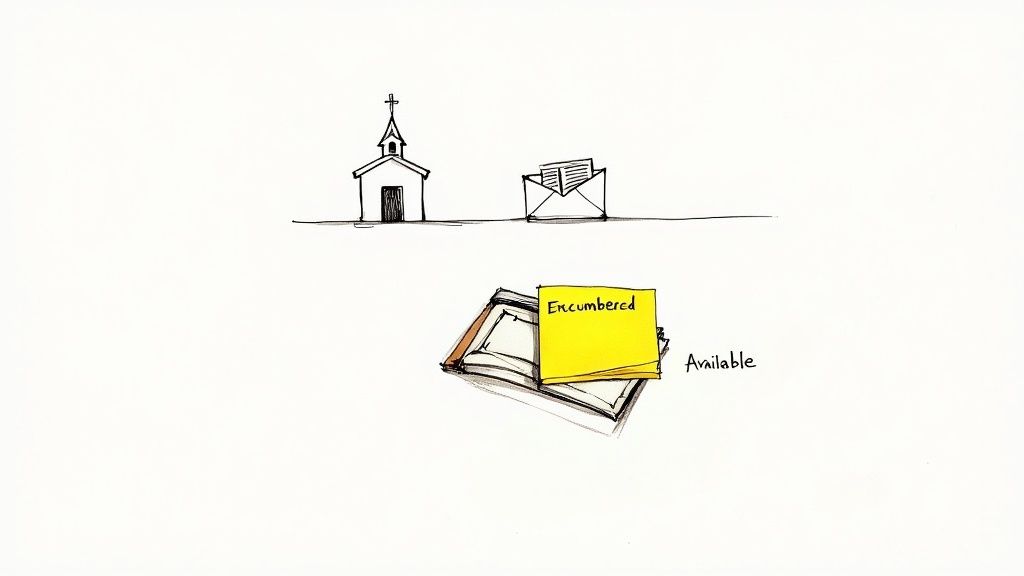
Let's bring this down to a personal level. Imagine your church's budget is like your family's checking account. You know your mortgage is due on the first of the month. Even if it's only the 25th and the money is still sitting in your account, you’ve mentally "earmarked" it. You know better than to spend it on a weekend getaway. Encumbrance accounting is just the official, formalized version of that process for your church.
It's a proactive step that shifts money from the "available to spend" column over to the "committed to spend" column, long before an invoice ever shows up. This gives you a much truer, real-time picture of your financial health. You’re no longer just looking at what’s in the bank; you’re looking at what’s actually left after all your promises have been accounted for.
A Practical Budgeting Tool
Encumbrance accounting really proves its worth when your church makes a financial commitment that won’t be paid right away. A few everyday examples jump to mind:
Signing a contract for those much-needed roof repairs.
Placing an order for new sound equipment for the worship team.
Approving the budget for next summer's youth mission trip.
In every one of these situations, the church is legally or morally obligated to pay, but the cash hasn't physically left the account. By recording an encumbrance the moment the commitment is made, you prevent that money from being reallocated to other operational needs. This simple act of reserving funds is a cornerstone of true fund accounting for nonprofits and is key to strong financial stewardship.
An encumbrance gives you a more accurate view of your available budget by recognizing commitments when they are made, not just when the check is cut. It closes the dangerous gap between what your budget says you have and what you’ve actually promised to spend.
The Foundation of Financial Control
This isn't a new concept. In fact, it has deep roots in structured financial management, especially in government and public-sector accounting. Cities and states have used encumbrances for decades to prevent overspending, setting aside funds for everything from purchase orders to payroll.
For churches, adopting this same practice brings the same powerful benefits. It builds a solid framework for accountability and ensures that ministry goals are always financially supported, all without risking the surprise of a budget overrun.
Why This Is So Important for Church Stewardship
For any church, handling money is never just about balancing the books—it's a sacred trust, a direct reflection of our commitment to stewardship. This is where encumbrance accounting shifts from being a technical term to a powerful tool for ministry. It's the practical link between your church's financial activity and its mission to honor God and serve your people with integrity.
At its core, encumbrance accounting protects the heart behind every donation. When a family gives to the building fund or the youth group, they're not just giving money; they're giving with a purpose. Encumbrances act as a financial promise, officially setting those funds aside so they aren't accidentally used for general operating costs. It’s how you guarantee that donor intent is always honored.
Building Trust Through Financial Honesty
Putting encumbrances in place creates a strong system of accountability. It sends a clear message to your board, your members, and your community that you take financial responsibility seriously. When people see that their designated gifts are used exactly as intended, their confidence in church leadership grows, often leading to more consistent and generous giving.
This level of transparency turns your financial reports from a page of numbers into a powerful story of good stewardship. Instead of just showing a single, potentially misleading cash balance, your reports can clearly break down what's really going on:
Committed Funds: Money that’s already been promised for a specific purpose, like a deposit for a missions trip or a contract for a new sound system.
Truly Available Funds: The resources you can actually use for new ministries, operational needs, or unexpected emergencies.
This difference is critical. Without it, a healthy-looking bank account might be hiding a string of upcoming payments, giving leaders a false sense of security.
Encumbrance accounting gives you an honest, real-time picture of where your church stands financially. It makes sure your books reflect your commitments, so decisions are based on reality, not just the cash you have on hand.
A Foundation for Smarter Ministry Decisions
Having a clear financial picture empowers church leaders to make wiser, more strategic choices. When the finance committee sits down to review the budget, they won't just see what's been spent—they'll see what the church is already obligated to spend. This foresight is a game-changer. It prevents accidental overspending and makes sure a critical ministry doesn't get short-changed because its funds were used for something else.
Ultimately, encumbrance accounting is about more than just numbers. It’s about building a ministry that is financially resilient and faithful to its calling. For churches ready to embrace this best practice, software designed for this very purpose, like Grain Ledger, can be an incredible help. Grain Ledger is built specifically for the fund-based accounting needs of churches, making it simple to track encumbrances automatically. This ensures your financial reporting is always accurate, transparent, and a true reflection of your commitment to responsible stewardship.
The Encumbrance Accounting Process from Start to Finish
To really get a feel for how encumbrance accounting works in practice, let’s walk through the entire lifecycle of a financial commitment. We’ll use a common scenario: your church contracts a local company to repair the roof for an estimated $15,000, with the work scheduled for next month.
Following this process ensures that from the moment you sign that contract, those funds are protected and your budget reflects reality. Here’s a step-by-step breakdown of how it all unfolds.
Step 1: Issue the Purchase Order and Create the Encumbrance
The second your church board approves the expense and signs the contract with the roofing company, you’ve made a commitment. No money has changed hands yet, but that $15,000 is effectively spoken for and shouldn't be considered available for anything else.
This is the exact moment you create a purchase order and make the initial encumbrance journal entry. Think of this first entry as putting a "hold" on the money, moving it from a general “available” status to a “committed” one in your books.
Here’s what that looks like:
Initial Encumbrance Entry:
Debit: Encumbrances Account ($15,000)
Credit: Reserve for Encumbrances Account ($15,000)
This simple transaction doesn't touch your cash balance. What it does is officially earmark the funds within your Building & Maintenance budget line. Anyone looking at the financial reports will now see that $15,000 has been set aside, giving them a true picture of what's left to spend.
Step 2: Receive the Invoice and Liquidate the Encumbrance
Fast forward a month—the roof repair is done, and the roofer sends their invoice. The final bill is a pleasant surprise, coming in just under the estimate at $14,800. Now that a real expense has occurred, it’s time to reverse, or "liquidate," the original encumbrance.
You only reverse the exact amount of the final invoice. This step clears the hold you placed on the funds and gets your books ready for the actual expense entry.
Reversal (Liquidation) Entry:
Debit: Reserve for Encumbrances Account ($14,800)
Credit: Encumbrances Account ($14,800)
You might notice that $200 is still sitting in the encumbrance accounts. This leftover amount needs to be cleared out with a final adjusting entry, which puts it right back into the available budget.
The core of encumbrance accounting lies in this two-part process: you first set funds aside when a commitment is made, and then you reverse that entry when the actual bill arrives. This maintains a clear and accurate picture of your budget at every stage.
Step 3: Record the Actual Expenditure
With the encumbrance out of the way, you can now record the payment just like any other expense. This entry is what actually impacts your cash position, decreasing your bank account and officially hitting the expense account.
Final Expenditure Entry:
Debit: Building Repair Expense Account ($14,800)
Credit: Cash or Accounts Payable ($14,800)
This final step completes the cycle. Your financial statements now accurately show that $14,800 was spent on roof repairs, and your budget correctly shows those funds as used.
To see these entries side-by-side, it helps to compare how an encumbrance entry differs from a standard expenditure entry for the same purchase.
Encumbrance vs Expenditure Journal Entries
Transaction Stage | Encumbrance Entry (Debit/Credit) | Expenditure Entry (Debit/Credit) |
|---|---|---|
Commitment Made | Debit: Encumbrances ($15,000) | No entry is made at this stage. |
Invoice Received | Debit: Reserve for Encumbrances ($14,800) | Debit: Building Repair Expense ($14,800) |
As you can see, the encumbrance is a temporary placeholder that never touches your actual expense or cash accounts. It’s purely a budget control tool.
For churches aiming for this level of financial clarity, using an accounting solution like Grain Ledger can be a huge help. It's designed to handle the fund accounting and encumbrance processes that are so vital to good stewardship, automating these entries to prevent errors and keep your budget on track.
How Encumbrances Transform Your Financial Reporting
If you're only looking at cash on hand, you're getting a dangerously misleading picture of your church's finances. Your budget reports might show a nice, healthy surplus, tempting leaders to say "yes" to new spending requests. This incomplete view is exactly why encumbrance in accounting is so important—it stops the guesswork and shows you the real-time truth of your financial situation.
By bringing encumbrances into the picture, your reports stop telling you what you have and start showing you what's actually available. That clarity is the key to preventing budget overruns, especially as you get closer to the end of the fiscal year.
The True Story Behind Your Budget
Let’s put this into a real-world church scenario. Imagine your facilities committee has a $50,000 annual budget for building maintenance. It’s October, and so far, you’ve spent $30,000. On a standard 'Budget vs. Actuals' report, it looks like you have a $20,000 surplus. Fantastic, right?
But wait. What that report doesn't show is the $15,000 contract you just signed to have the parking lot repaved next month. Without encumbrance accounting, that commitment is completely invisible. A report that includes encumbrances tells the whole story, revealing that only $5,000 is truly left to spend on any new projects. That insight is what stops the committee from accidentally spending the same money twice.
A financial report without encumbrances shows your history. A report with encumbrances shows your future. It makes your commitments visible, empowering leaders to make smarter decisions based on what’s truly left to spend.
This simple cycle shows how a commitment goes from being an idea to a reserved expense.
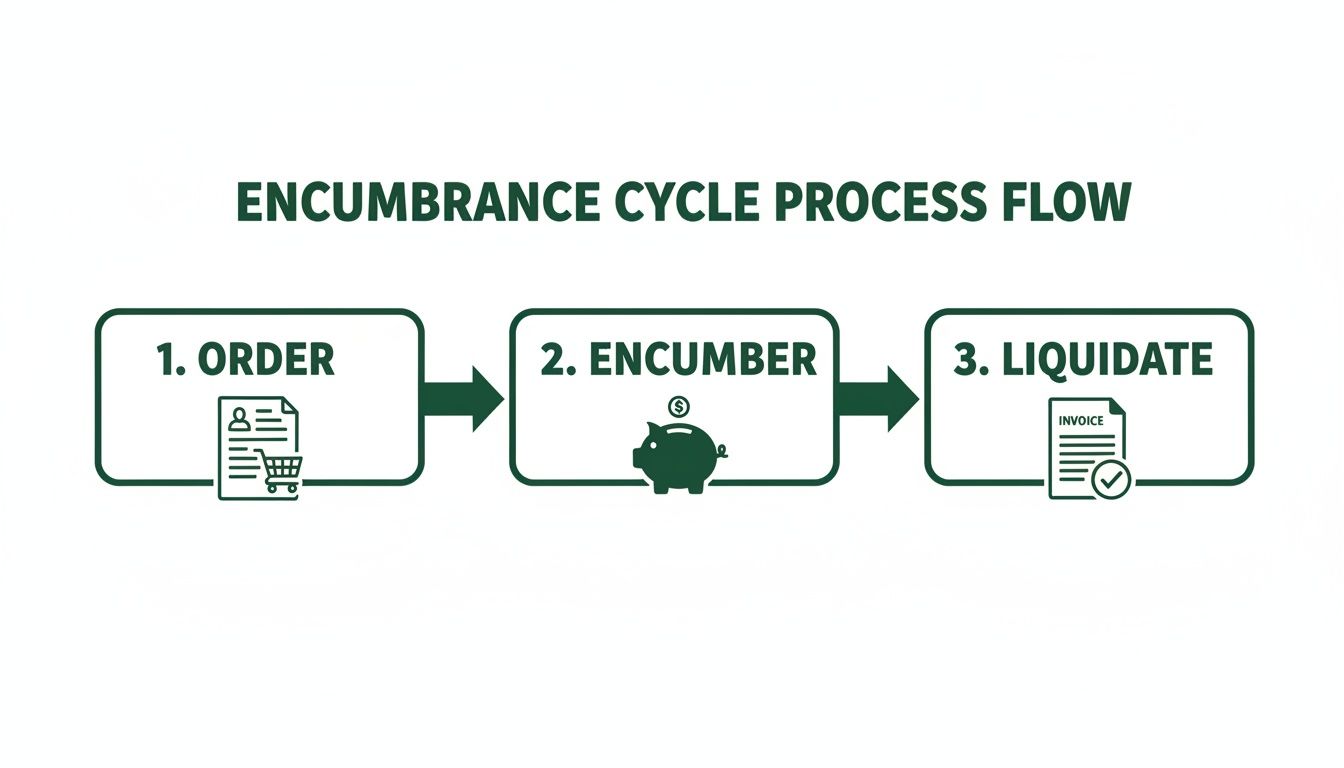
As you can see, "encumbering" is that crucial middle step that happens before an invoice is ever paid. It ensures funds are set aside the moment a commitment is made, not weeks or months later.
A Foundational Financial Principle
This idea of reserving, or "encumbering," assets isn't just a niche practice for nonprofits; it's a cornerstone of global finance. For example, the massive covered bond market is built on asset encumbrance, where assets are pledged to back the bonds being issued. That market was valued at about EUR 2.705 trillion at the end of 2019, which shows just how vital this concept is for creating financial stability.
For your church, adopting this same principle brings that same level of powerful clarity to your ministry’s financial reports. When you can present a complete picture of both your past spending and your future commitments, you build trust and enable much more effective stewardship. To see how this fits into the bigger picture, check out our guide on financial reporting for churches and learn how these practices work together.
Best Practices for Managing Church Encumbrances
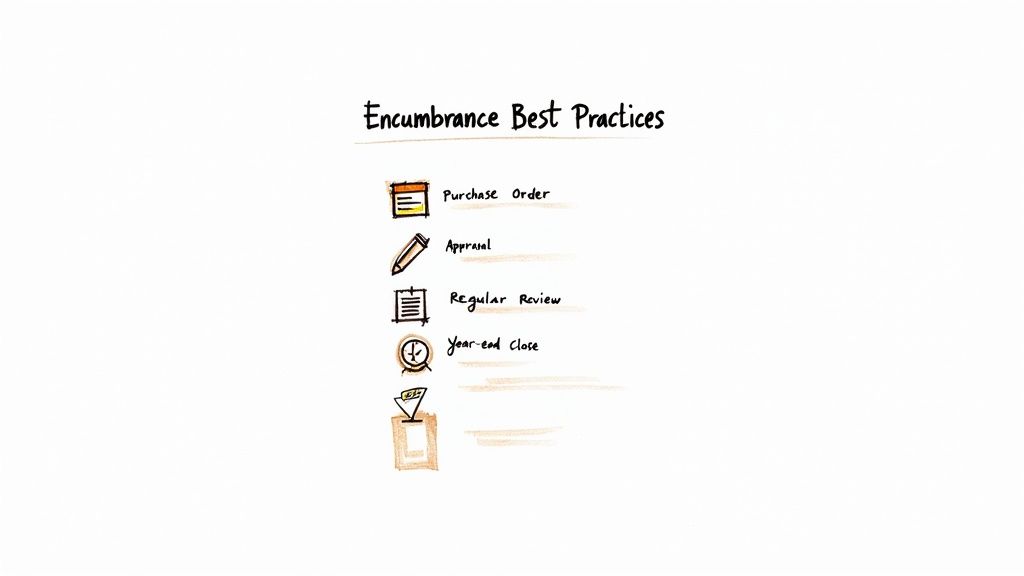
Putting an encumbrance system in place is a huge leap forward for financial stewardship, but keeping it running smoothly takes some discipline. For encumbrance in accounting to become a sustainable part of your church's operations, you need to set up clear, consistent habits that your team can actually follow.
The whole point is to build a system that gives you better control without drowning everyone in administrative work. These best practices will help you find that sweet spot, making sure your financial commitments are always visible and your budget stays on track.
Establish Clear Policies and Procedures
First things first: you need a simple, written policy explaining how your church handles commitments. This doesn’t have to be a novel, but it should clearly lay out the process for approving and recording any financial obligations.
A solid policy should include:
A formal purchase order system: This is the backbone of encumbrance accounting. Require a PO for any commitment over a set dollar amount. This creates a concrete paper trail and a clear trigger for recording the encumbrance.
Defined approval workflows: Who can approve purchase orders? Map out who has the authority for different ministries or spending levels. This simple step prevents unauthorized spending and builds accountability.
Centralized responsibility: Assign one person or a small team—like the church treasurer or bookkeeper—to handle all encumbrance entries. This consistency is your best defense against errors.
Conduct Regular Reviews of Outstanding Encumbrances
It’s surprisingly easy for old commitments to get forgotten. Maybe a purchase order was created for new Sunday School curriculum months ago, but the order was later canceled. If that encumbrance isn't reversed, it will tie up budget funds that are actually available.
Regularly reviewing your open encumbrances—at least quarterly—is crucial. This proactive check helps you identify and remove outdated commitments, freeing up those reserved funds and ensuring your budget reflects current reality, not past intentions.
This review process prevents your "committed funds" from being artificially inflated with phantom obligations, giving you a much truer picture of what you have left to spend.
Manage Year-End Encumbrances
When the fiscal year comes to a close, you'll need a clear plan for any open encumbrances. You have to decide if these outstanding commitments will be canceled or if the funds need to be carried over into the next year's budget. Making this decision ahead of time prevents last-minute scrambling and gives you a clean start for the new financial period.
Trying to manage all of this with spreadsheets can get messy fast. For churches looking for a tool built for their unique needs, our recommended accounting solution is Grain Ledger. It’s an accounting platform designed specifically for the fund-based world of churches, making it much easier to track encumbrances and maintain strong fiscal discipline.
Using Software to Simplify Encumbrance Tracking
Trying to track financial commitments manually with spreadsheets is more than just a headache—it’s asking for trouble. A single broken formula or a forgotten entry can completely throw off your budget, leading to some truly painful financial decisions down the road. This is precisely where the right technology can make encumbrance in accounting virtually foolproof.
Specialized church accounting software with built-in encumbrance features takes the entire manual workload off your plate. These systems are designed to handle the journal entries for you, linking every commitment directly to your budget. When you approve a purchase order, the software automatically sets aside the funds.
The Power of Automation
Then, when the actual invoice comes in, the system reverses the encumbrance and records the real expense, all with just a few clicks. This automation gives you one of the most powerful tools in church finance: real-time reporting. Your budget-to-actual reports are always current, showing not just money that's already gone, but also money you've promised to spend.
This kind of accuracy is at the heart of good stewardship. While encumbrance accounting is a best practice for nonprofits, it's a core principle for massive financial institutions, too. For example, by December 2017, European banks saw their asset encumbrance climb to a weighted-average of 27.9% of their total assets. It’s a clear signal of how vital it is for large organizations to track committed assets for financial stability. You can dig into the full story in the European Banking Authority's report.
Modern accounting software turns encumbrance tracking from a complex, error-prone chore into a simple, automated process that runs in the background. This frees up your team to focus on ministry instead of spreadsheets, all while maintaining complete financial discipline.
Choosing the Right Tool for Your Church
A generic business accounting platform just won't cut it for a church. You need a system that's built on a foundation of fund accounting. If you're starting your search, our guide on fund accounting software for churches is a great place to learn what to look for.
For a purpose-built solution, we recommend Grain Ledger, which is designed from the ground up to handle these unique needs. It gives you the perfect platform to maintain fiscal discipline without the complexity. By automating encumbrance tracking within a true fund accounting system, Grain Ledger provides the clarity and control you need to honor donor intent, prevent overspending, and lead your ministry with financial confidence.
A Few Common Questions About Encumbrance Accounting
When churches first start using encumbrance accounting, a few questions almost always pop up. Getting these distinctions straight can make a world of difference in your financial stewardship.
What's the Real Difference Between an Encumbrance and Accounts Payable?
This is the most common question, and the answer comes down to timing. Think of it this way: an encumbrance is a promise you’ve made. It’s the moment you sign a contract or issue a purchase order, earmarking those funds for a future payment.
An account payable, on the other hand, is a bill you actually owe. The goods have been delivered or the service has been rendered, and now you have a legal obligation to pay. The encumbrance is the commitment; the payable is the debt.
Is This Actually Required for Churches?
While there's rarely a legal requirement forcing churches to use encumbrance accounting, it is absolutely a best practice for strong financial integrity. It’s the only way to truly protect designated funds and get an honest, real-time picture of what money is actually available to spend.
What Happens if the Final Invoice Is Different From the Purchase Order?
This happens all the time. Say the final bill is slightly higher or lower than what you originally encumbered. The process is straightforward: you simply reverse the encumbrance for the actual invoice amount and record the expenditure.
Any small leftover balance in the encumbrance account from that transaction can be cleared out with a quick adjusting entry. It keeps your books clean and your budget accurate.
Ready to bring clarity and control to your church's finances? Grain Ledger is purpose-built for the fund accounting and encumbrance needs of ministries. Join the waitlist to learn more.