
volunteer background screening: A Church Leader's Guide
Learn practical volunteer background screening steps for churches: legal basics, workflows, and choosing the right vendor.
Volunteer background screening is simply the process of looking into a person's history before they officially start serving at your church. It's a fundamental safety measure, designed to protect your congregation—especially kids and vulnerable adults—by flagging potential risks in a candidate's past. Taking this step is all about making sure your volunteers uphold the values of trust and security that are so vital to your ministry.
Building a Foundation of Trust and Safety
Think of your church as a home. It’s meant to be a place of refuge, community, and spiritual growth. You wouldn't just hand over the keys to a stranger, right? The same principle applies here. You need a reliable way to ensure the people serving in positions of trust are truly a good fit. Volunteer background screening is that process—it acts as a guardian for your community, safeguarding your members and preserving the integrity of your mission.
This isn't about fostering a culture of suspicion. Far from it. It’s about building a culture of safety. A well-thought-out screening program shows that your church takes its duty of care seriously. It sends a powerful message to parents, members, and the wider community that you are committed to creating the safest possible environment for everyone who walks through your doors.
The Essential Components of a Safety Net
A truly effective background check isn't just one search; it's a combination of several checks that weave together to form a comprehensive safety net. Each piece gives you a different part of the puzzle, helping you see a much clearer picture of a potential volunteer.
Most strong screening programs include these core elements:
- Identity Verification: This is the starting point. It confirms a person is who they claim to be, usually by cross-referencing their Social Security number and address history. It ensures all the other searches are run on the right individual.
- Criminal History Searches: This is the heart of most screening programs. These searches comb through records at the county, state, and national levels to look for a criminal history.
- Sex Offender Registry Checks: This is non-negotiable for any role involving children or vulnerable adults. It scans national and state registries to identify registered sex offenders.
When you put them together, these components create a multi-layered defense. An identity check stops someone from hiding under a false name, while the criminal and registry searches flag specific, high-risk behaviors that could put your congregation in harm's way.
Understanding the Screening Landscape
When it's time to actually run these checks, churches typically have a few options. The path you choose can make a big difference in the quality, speed, and accuracy of the results.
Here's a look at how most organizations handle this, based on research from the 2018 Volunteer Screening Report.
Common Sources for Volunteer Screening
| Screening Source | Organizational Usage Rate |
|---|---|
| External Third-Party Provider | 53.61% |
| Direct Government Sources | 26.31% |
| Internal / Do-It-Yourself | 15.98% |
As you can see, the data shows a clear preference for professional services. Most organizations find that partnering with a dedicated screening provider delivers the most reliable and compliant results.
The image below gives a good visual overview of the different areas that a background investigation can cover.
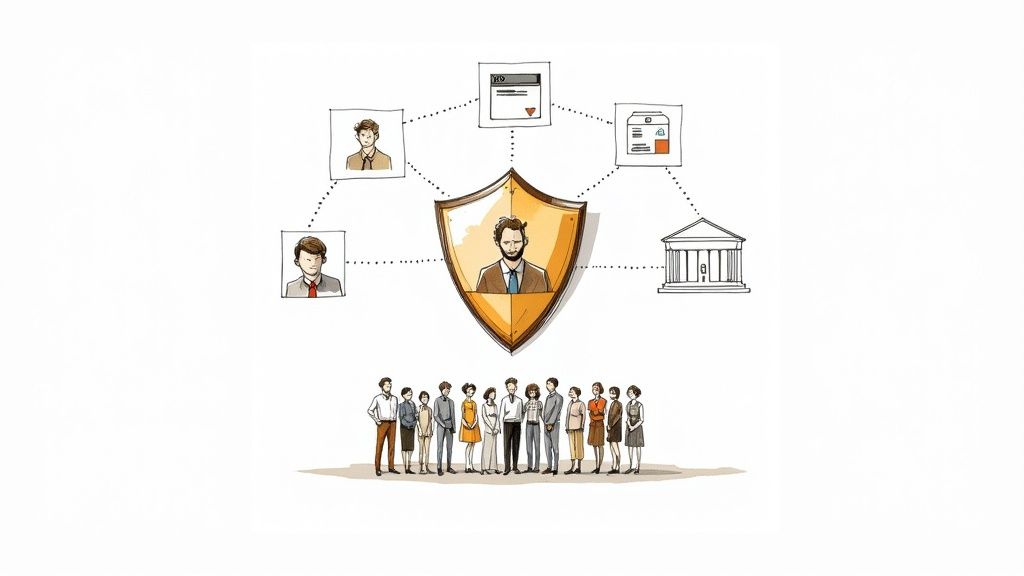
This really drives home the point that a thorough check goes beyond a simple criminal search. It often includes verifying employment history, education, and references to build a more complete profile of a candidate. This holistic approach is crucial for making sure your volunteers are not only safe but also well-suited for their roles within your ministry.
Navigating Legal Compliance and State Laws
Volunteers are the lifeblood of any church. But before someone steps into a ministry role, you need a clear legal framework—kind of like guardrails on a winding road—to keep everyone safe.
At the federal level, the Fair Credit Reporting Act (FCRA) serves as the foundation. While its name suggests a focus on credit, the FCRA actually covers any “consumer report” prepared by an outside agency. In plain terms, that includes background checks.
Partnering with a screening vendor means you’ll follow the FCRA’s steps to keep the process fair and transparent. These guidelines aren’t obstacles; they protect both your church and the person volunteering.
Core FCRA Requirements for Churches
Running a background check without meeting federal standards can spell trouble. Here’s what you must do:
- Provide Clear Disclosure: Give the volunteer a standalone written notice that you intend to run a background check. This notice can’t hide in the fine print.
- Obtain Written Consent: After the disclosure, get explicit written permission from the volunteer. Think of this as their green light for you to proceed.
- Follow Adverse Action Steps (If Needed): If a report leads you to reconsider a volunteer, you must first send a pre-adverse action notice with a copy of the report. After you make a decision, follow up with a final adverse action notice. This gives the individual a chance to review and dispute any errors.
By following these steps, you build trust and show that your church values fairness and integrity.
State Laws Add Another Layer
On top of federal rules, each state adds its own requirements. Some limit how far back you can look into someone’s history. Others demand extra checks for volunteers working with youth.
Here are a few common variations:
- Reporting Limitations: States like California and Pennsylvania require fingerprint-based checks and specialized training for youth-focused volunteers.
- "Ban the Box" Laws: While usually aimed at employment, these laws can influence when you’re allowed to ask about criminal history.
- Data Privacy: Rules for collecting and storing volunteer information differ from state to state. For a deeper dive into how we handle data, see our privacy policy.
Keeping both federal and state regulations in view is key to a responsible, legally sound volunteer screening program. A well-designed process not only shields your church from risk but also demonstrates your commitment to thoughtful stewardship.
Figuring Out Who Needs a Background Check and When
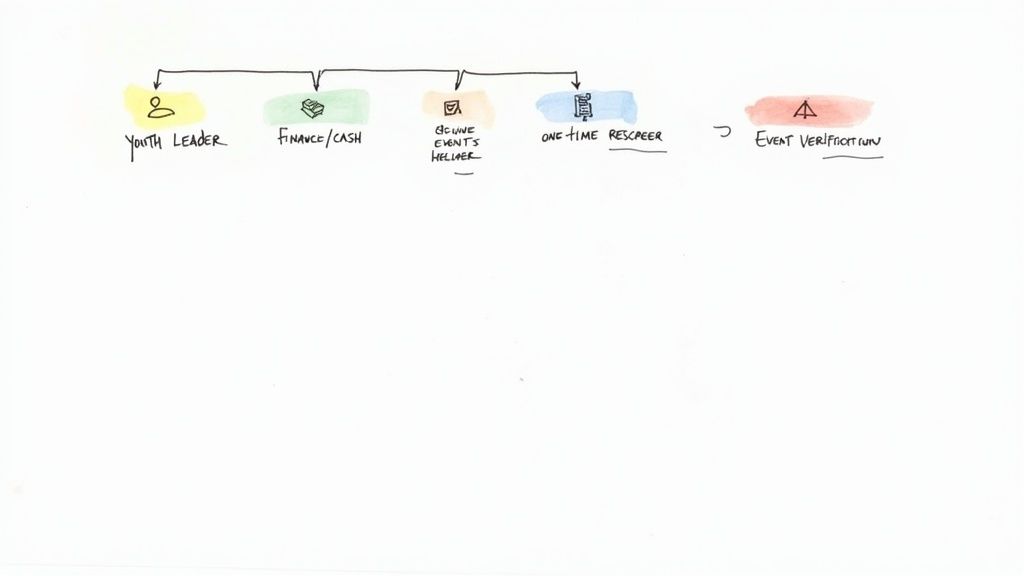
It's tempting to think that every single volunteer needs the exact same, in-depth background check. But that kind of blanket approach isn't just inefficient—it can also put up unnecessary roadblocks for people who simply want to help out. A much smarter way to handle volunteer background screening is to match the intensity of the check to the actual responsibilities of the role.
Think of it like different levels of access. The person who helps set up chairs in the sanctuary once a month doesn't need the same level of vetting as the youth leader who will be driving a van full of teens to a weekend retreat. By creating a role-based strategy, you can channel your time and resources toward the areas of greatest risk, keeping everyone safe without scaring off potential volunteers.
It all starts with a straightforward risk assessment. Once you categorize your volunteer roles based on who they interact with and what they have access to, you can build a screening policy that is both clear and easy to defend.
How to Assess Risk for Different Volunteer Roles
A great first step is to sort your volunteer positions into a few tiers. This simple framework makes it crystal clear who needs what type of screening and how often you should be running those checks.
High-Risk Roles: These are the positions with unsupervised access to children, vulnerable adults, or church finances. Think youth pastors, children's ministry teachers, volunteer accountants, or members of your elder board. These roles demand the most thorough screening you can run.
Medium-Risk Roles: Volunteers here might have supervised contact with vulnerable groups or handle sensitive information. This tier could include small group leaders, Sunday school helpers who are never alone with kids, or office volunteers who manage the church database.
Low-Risk Roles: These roles have very little, if any, direct contact with vulnerable people and zero access to financial or confidential data. Greeters, the event setup crew, or the team that helps with landscaping are perfect examples. They often require a much lighter screening process, if any at all.
A tiered approach helps your church be both responsible and realistic. You ensure that people in positions of high trust are vetted properly, while keeping the door wide open for those who want to serve in lower-risk, but still vital, capacities.
Creating a Timeline for Your Screening Process
Once you've defined your risk tiers, the next piece of the puzzle is deciding when to run the checks. A consistent timeline ensures no one gets missed and that your safety standards are always up to date.
Your timeline should really focus on three key moments:
- Initial Screening: This is the big one. It's the comprehensive background check you conduct before a volunteer is approved to start serving in any medium or high-risk role.
- Periodic Rescreening: People’s lives change, and a one-time check isn't enough. It's a widely accepted best practice to re-screen your high-risk volunteers every 3-5 years to ensure your information is current.
- Event-Specific Checks: What about that big summer festival where you need dozens of one-day helpers? For large events with many temporary volunteers, a more basic, instant check can be a practical way to quickly vet a large group.
Putting Your Screening Plan Into Action
Having a clear, step-by-step process for screening volunteers is like having a good roadmap. Without it, you’re bound to hit detours and delays, leaving potential volunteers feeling frustrated and important safety checks incomplete. A well-thought-out workflow makes sure everyone is treated fairly and consistently, turning a potentially messy task into a smooth, manageable system.
Think of this workflow as the practical side of your church’s commitment to safety. It’s the playbook that guides your team from the moment someone fills out an application to when they’re cleared to serve. Not only does this protect your congregation, but it also creates a professional and respectful experience for those who are excited to get involved.
When someone offers their time, a clunky, confusing process can feel discouraging. By mapping out each step clearly, you build a system that is both thorough and welcoming.
Step 1: Securely Gathering Information and Getting Consent
The moment a potential volunteer raises their hand to serve, your workflow kicks in. The very first thing you need to do is collect their personal information securely and get their legal permission to run a background check. This is a non-negotiable step, guided by the rules of the Fair Credit Reporting Act (FCRA).
Here’s what that looks like in practice:
- Provide a Clear Disclosure: You must give the applicant a separate, easy-to-read document that clearly states you intend to run a background check. This can't be buried in the fine print of a larger application.
- Get Written Authorization: The volunteer needs to sign a consent form that gives you explicit permission to move forward. This is their clear and documented "yes."
Many modern screening companies provide secure online portals where volunteers can input their own information. This is a huge help—it cuts down on typos, speeds things up, and keeps sensitive data like Social Security numbers out of your hands and directly with the vendor.
Step 2: Sending the Request to Your Screening Partner
Once you have the signed consent form, it's time to pass the baton to your background check provider. Usually, the church administrator or a dedicated volunteer coordinator handles this part. (If you want to learn more about what that role involves, check out our guide on the duties of a church administrator.)
Your screening partner takes it from here, running the specific searches you’ve decided on. How long this takes can vary. Instant database searches might come back in minutes, while deeper county courthouse record checks could take a few business days. A good workflow plans for these different timelines so you can give volunteers a realistic idea of what to expect.
Step 3: Reading the Report and Making a Decision
Getting the completed background report back is the moment of truth. This is where having a pre-established policy is so important. You can't just wing it. Not every red flag on a report means an automatic "no"—context is everything.
Your review team should look at the findings through a clear lens, asking questions like:
- Is it Relevant? Does the offense have any bearing on the volunteer’s ability to serve safely and effectively in this specific role?
- How Serious Was It? What was the nature of the crime?
- How Long Ago Was It? Did this happen last year or a decade ago?
A Real-World Example: A church received a report for a potential greeter that showed a DUI from eight years ago. The role didn't involve driving, and a lot of time had passed. The church leaders talked with the applicant about it openly and, seeing his life had changed, approved him for the position. Their policy allowed them to balance safety with grace.
If you find something in the report that might make you decide against bringing the volunteer on board, you have to follow a specific legal process called adverse action. First, you must send a "pre-adverse action notice," which includes a copy of the report, giving the volunteer a chance to review it and dispute any errors. After waiting a reasonable amount of time, you can then send the final "adverse action notice" with your decision. This two-step process is required by law and ensures everyone is treated fairly.
Choosing the Right Screening Partner
Picking a company to handle your volunteer background checks is a huge decision. Think of it less like hiring a contractor and more like bringing on a partner in ministry—one whose work directly affects the safety and well-being of your entire congregation.
The right partner delivers accurate, timely, and legally sound information. The wrong one? They can leave you with confusion, frustrating delays, and even legal headaches. This choice ripples through everything from your annual budget to the first impression a new volunteer has of your church.
A great screening partner should feel like an extension of your own team. Look for features that make your life easier, like a secure online portal where volunteers can input their own info. This simple feature is a game-changer. It cuts down on administrative busywork for your staff and dramatically boosts security by limiting the number of hands touching sensitive data like Social Security numbers.
Evaluating Key Vendor Features
When you start comparing vendors, it’s easy to get lost in the details. Go beyond just the basic criminal history search. The best partners offer a whole toolkit designed to make your process smoother and more reliable.
One of the most powerful features is integration with your existing Church Management Software (ChMS). When your screening tool can "talk" to your ChMS, it automates tedious tasks and keeps all your volunteer information in one central, easy-to-manage place. No more jumping between systems.
As you vet potential partners, keep these essentials on your checklist:
- Customizable Packages: Does the vendor let you build different screening packages for different volunteer roles? A one-size-fits-all approach is a waste of money and time. You don't need the same deep dive for a parking lot attendant as you do for a youth leader.
- Clear Reporting: Are the final reports easy to read and understand? You shouldn’t need a law degree to decipher the results and make a confident, responsible decision.
- Accreditation: Is the company accredited by the Professional Background Screening Association (PBSA)? This is a huge indicator that they are committed to high ethical standards and legal compliance.
This simple flowchart shows what the process should look like when you have a good partner on your side.
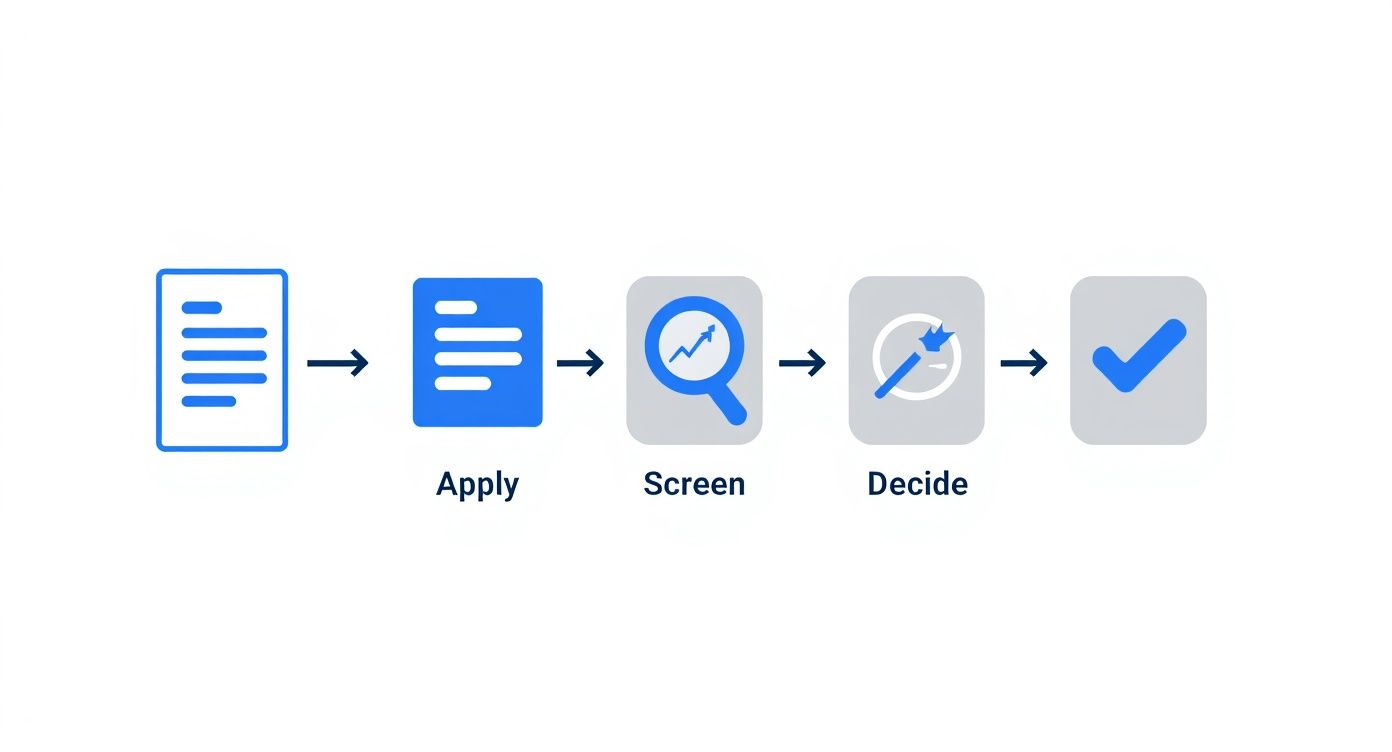
As you can see, a well-chosen partner makes the journey from application to final decision smooth and efficient for everyone involved.
Understanding Costs and Turnaround Times
Of course, cost matters. But chasing the absolute cheapest option is almost always a mistake in the long run. Focus on getting real value and transparent pricing. Don't be afraid to ask about extra charges, like courthouse access fees, that can pop up and inflate your final bill.
Turnaround times can vary quite a bit. Instant database searches might come back in minutes, while a thorough county-level records check could take a few business days. A good vendor will be upfront about these timelines.
Then there’s the big question: who pays? It’s a touchy subject. While 60% of organizations screen all their volunteers, only 32% of volunteers say they've actually been screened for every role they've taken on. Interestingly, both churches and volunteers tend to agree the church should foot the bill. That said, many volunteers are willing to chip in $20-$25 if asked. If you want to dig deeper into this, you can learn more about volunteer and nonprofit industry insights.
This tells us that having a "volunteer-paid" option can work, but you have to handle it thoughtfully. You never want the cost of a background check to become a barrier that keeps a passionate, qualified person from serving.
Managing Records and Preparing for the Future
Once a volunteer’s background check comes back clear, it's tempting to think the job is done. But the work has really just shifted. Proper recordkeeping is that final, critical step that ensures your church stays accountable and protected for the long haul. Think of it as building a secure library for your safety program—every piece of information is carefully organized, protected, and only accessible to those who absolutely need to see it.
This isn’t just about being organized for the sake of it; it’s a legal and ethical imperative. Keeping these records correctly proves you’ve done your due diligence and gives you a clear audit trail if a volunteer placement is ever questioned. A well-managed system for storing results, tracking renewal dates, and monitoring volunteer statuses is the backbone of a sustainable safety culture.
Establishing a Secure Recordkeeping System
The cornerstone of managing these records is security. Background screening reports are filled with highly sensitive personal information, so you have to store them with the utmost care to prevent anyone from stumbling upon them. That means paper files in an unlocked cabinet just won't cut it anymore.
Digital storage is the way to go, but it demands its own set of precautions:
- Access Control: Only a very small, authorized group should ever see these records. This is typically limited to someone like the lead pastor or the head of the volunteer ministry.
- Secure Platforms: Use password-protected, encrypted systems. Many background screening vendors provide secure online dashboards designed specifically for this.
- Data Minimization: Don't hang onto more information than you need. In most cases, the final "clear" or "consider" report and the signed consent form are all you should keep.
Your system also needs a clear policy for how long you'll keep these records and how you'll get rid of them. While the Fair Credit Reporting Act (FCRA) doesn't specify a timeframe for volunteer records, a widely accepted best practice is to hold onto them for the entire time the person serves, plus a reasonable period afterward—often five to seven years. After that, they should be securely and permanently destroyed.
Creating Dashboards for Easy Oversight
Trying to manually track the screening status for dozens, or even hundreds, of volunteers is a recipe for headaches and mistakes. This is where a simple reporting dashboard becomes an absolute game-changer, giving you a quick, at-a-glance overview of your entire volunteer team.
Here is an example of what a simple volunteer screening dashboard might look like.
This kind of visual tool lets you see in an instant who is cleared to serve, whose rescreening date is coming up, and which reports are still pending. A good dashboard, whether it’s a feature from your screening vendor or something you create in a spreadsheet, should track key details: the volunteer's name, their primary role, the date of their last screen, and their next scheduled rescreening date. This proactive approach ensures no one falls through the cracks. For leaders who also handle the church's finances, this level of organized tracking fits perfectly with the accountability principles discussed in our guide on church finance committee responsibilities.
Preparing for the Future of Volunteer Screening
The world of background screening is constantly evolving, thanks to new technology and shifting legal requirements. Let's take a look at the bigger picture.
Globally, the background screening market continues to expand as organizations everywhere become more aware of risks and navigate changing privacy laws.
Global Background Screening Market Outlook
| Region | Estimated Market Value | Primary Growth Driver |
|---|---|---|
| North America | USD 4.8 Billion | Stringent regulatory compliance (FCRA) and high adoption in hiring. |
| Europe | USD 3.5 Billion | GDPR enforcement and increasing cross-border employment checks. |
| Asia-Pacific | USD 2.9 Billion | Rapid economic growth and rising awareness of workplace safety. |
| Rest of World | USD 0.8 Billion | Globalization of the workforce and emerging screening standards. |
As you can see, this isn't a niche concern—it's a global standard. Understanding these trends helps your church stay ahead of the curve. You can discover more insights about these global market trends and their drivers in this detailed report.
For churches, staying current means keeping an eye on a few key developments:
Continuous Monitoring: Instead of rescreening someone every few years, some services now offer ongoing monitoring. These systems can send real-time alerts if a volunteer is arrested or charged with a relevant crime, allowing you to respond immediately instead of waiting for the next check.
This technology marks a huge shift from a static, one-time snapshot to a dynamic, ongoing safety model. As you plan for the future, a key goal should be integrating your screening data with your main volunteer management system. This connection will help streamline the renewal process, automate reminders for rescreening, and keep your safety protocols strong and effective for years to come.
Answering Your Key Questions
As you put these principles into practice, specific questions are bound to come up. Let's walk through some of the most common ones we hear from church leaders, so you can move forward with clarity and confidence.
What Specific Checks Should We Run on Volunteers?
This really depends on the role. For anyone in a high-trust position—think children's ministry, youth group, or handling finances—you need a thorough, multi-layered approach. That means starting with identity verification, then running a national criminal database search, a nationwide sex offender registry check, and a county-level criminal records search for the most accurate, up-to-date picture.
For volunteers in lower-risk roles, a basic national criminal and sex offender search might be all you need. The key is to match the depth of the screen to the level of responsibility.
How Do We Handle a "Hit" on a Background Check?
First and foremost, with grace and discretion. This is where having a clearly defined policy before you start screening becomes so important, as it gives you a roadmap to follow.
If a report flags an issue, your next step should be a private, compassionate conversation with the volunteer. Remember, the Fair Credit Reporting Act (FCRA) gives them the right to see the report and dispute any errors, so following the official adverse action process isn't just good practice—it's the law.
Who Foots the Bill for the Screening?
Most churches choose to cover the cost themselves. You never want finances to be a barrier that prevents a willing and qualified person from serving.
That said, some churches have found success with a hybrid model, where they invite volunteers to help cover the cost if they're able. The crucial thing here is transparency. Whatever you decide, communicate it clearly from the very beginning so there are no surprises.
How Often Do We Need to Rescreen People?
Screening isn't a one-and-done event. People's lives change, and a check from five years ago doesn't reflect who they are today.
For anyone serving in those high-trust roles we talked about, the widely accepted best practice is to rescreen them every three to five years. This demonstrates an ongoing commitment to safety and ensures your records stay current. Many screening services even let you set up automated reminders to make this much easier to manage.
Managing your church's finances, including budgeting for crucial safety measures like background screening, requires a system designed for ministry. Grain offers true fund accounting, giving you complete clarity and confidence in your financial stewardship. Schedule a Demo to learn more.
Ready to simplify your church finances?
Schedule a demo to see Grain Ledger in action, or sign up for product updates.